Short answer
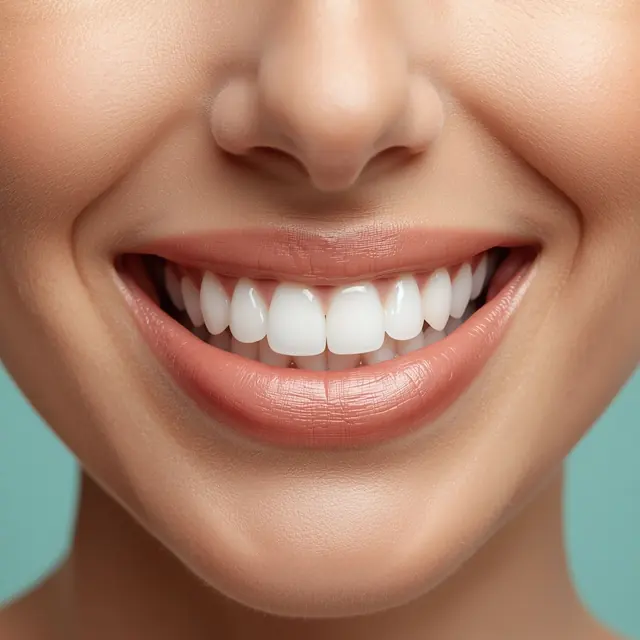
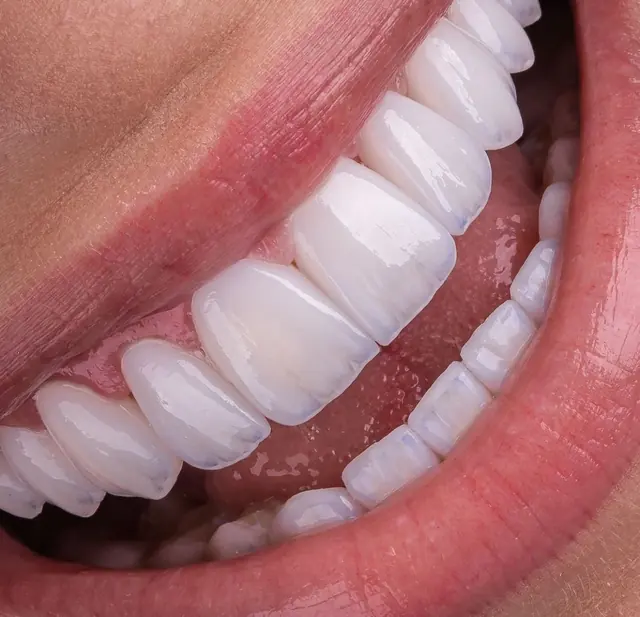
Porcelain veneers are very thin, custom-made shells bonded to the visible side of the tooth to change its color, shape or size. They require removing a minimal layer of enamel, so the treatment is not reversible. With good care, they can last many years.
When they’re recommended
They work well for small or medium fractures, unsightly gaps, stains that don’t respond to whitening, or old composite fillings on the front teeth.
When they’re not the best option
If you clench or grind your teeth, or have a very deep bite, veneers can get damaged. Cavities and gum disease also have to be treated first.
Porcelain or composite
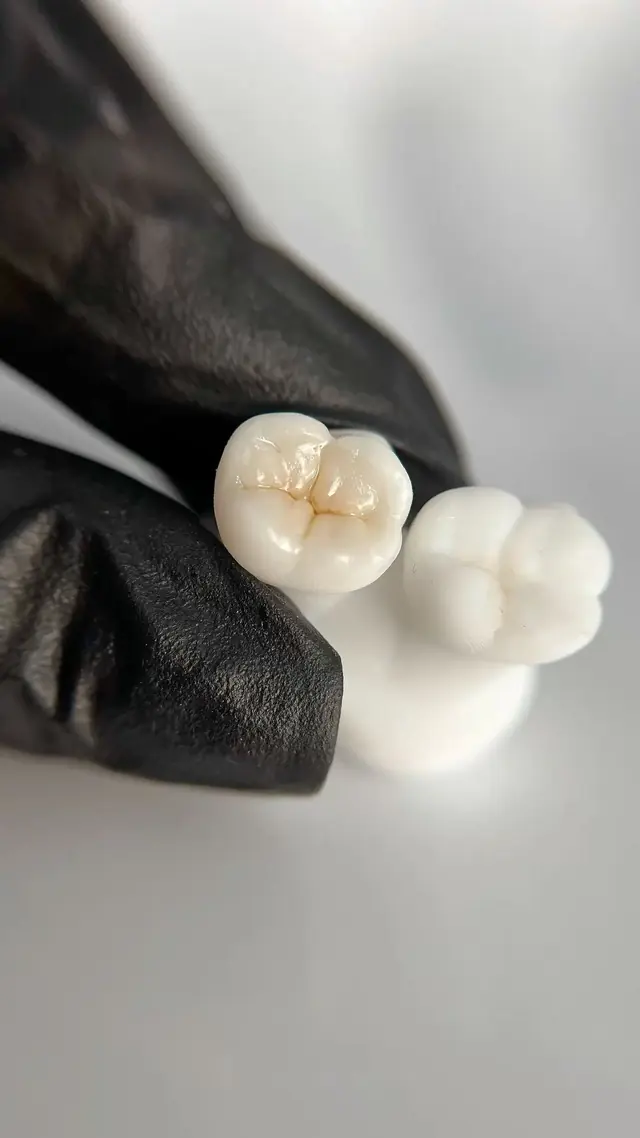
Porcelain is more durable and holds its color. Composite resin requires less preparation and is easy to repair, but it stains more and doesn’t last as long.
How it works
- Evaluation and photos of your smile.
- Trial smile to agree on the result.
- Minimal enamel preparation.
- Impression or 3D model for the lab.
- Bonding the veneers and adjusting your bite.
Frequently asked questions
Do veneers damage your teeth?
A very thin layer of enamel is removed, and it does not grow back. That means the tooth will always need a restoration. It’s a decision to make fully informed.
Can veneers be whitened?
No. Whitening works on natural teeth, not on porcelain. If you want lighter teeth, do it before choosing your veneer color.
Sources
For information only. This is general information and does not replace an evaluation. The right treatment depends on your case and is determined by your dentist after examining you. Updated: 2026-11-01.